
HM Land Registry Lease Plan Requirements
Everything you need to know about preparing a compliant lease plan — including the latest HM Land Registry guidance, common rejection reasons, and our professional lease plan service.
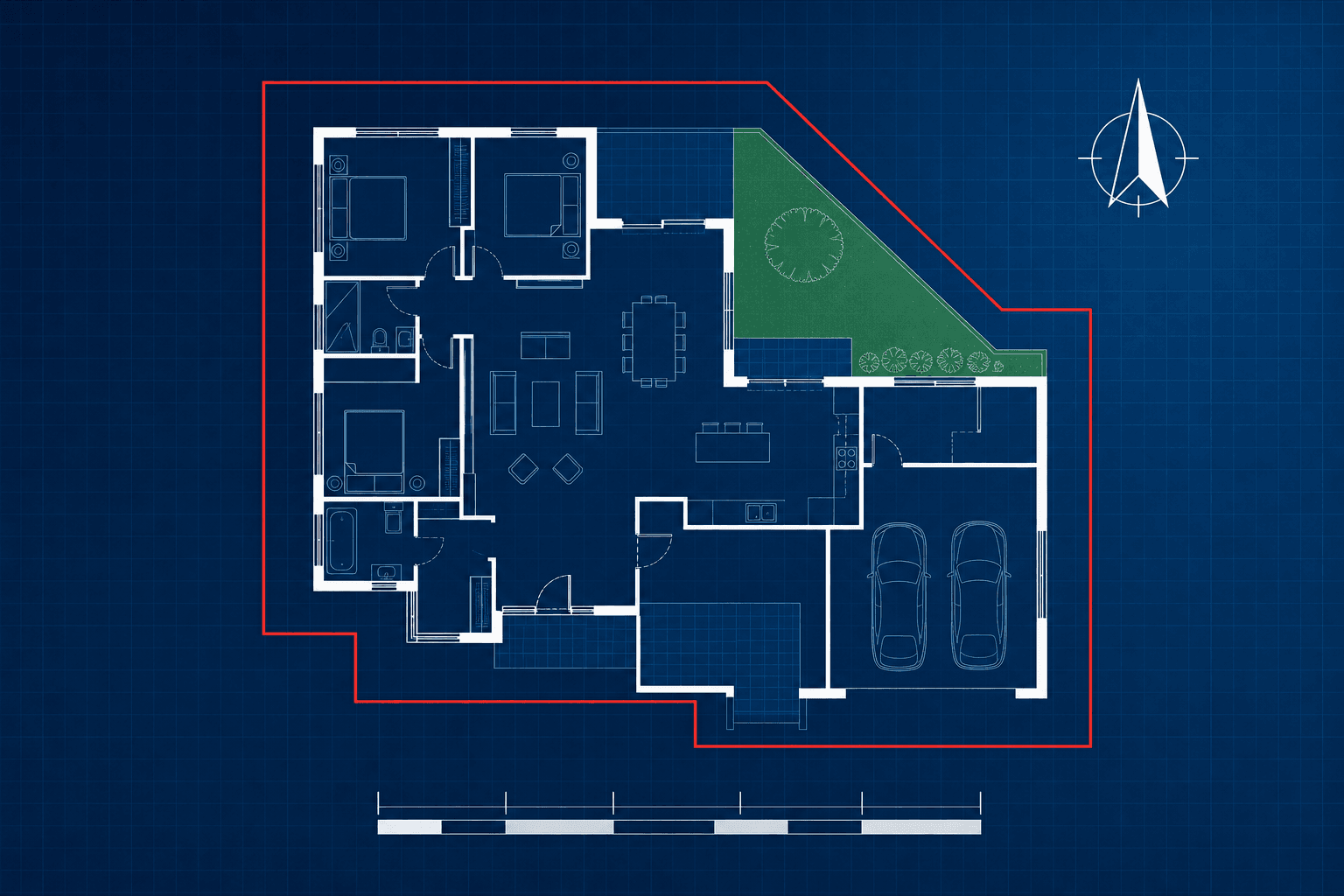
What are the requirements for a lease plan?
A Land Registry compliant lease plan must accurately identify the property being leased. It should be drawn to a recognised metric scale, include a north point where appropriate, clearly identify the demised premises, show sufficient surrounding detail for the property to be identified on the Ordnance Survey map, and comply with HM Land Registry Practice Guide 40.
HM Land Registry Practice Guide 40 (GOV.UK)Lease plans at a glance
- Lease Plan Turnaround
- 3–5 working days
- Lease Plan Scale
- Typically 1:100 or 1:200
- Land Registry
- HM Land Registry compliant
- Residential From
- £199 + VAT up to 1,000 sq ft
- Commercial From
- £299 + VAT up to 1,000 sq ft
- Coverage
- England & Wales
HM Land Registry requires lease plans to be drawn to a recognised metric scale, to clearly identify the demised area, and to contain enough detail for the land to be identified on the Ordnance Survey map. The six elements below are what separate a compliant lease plan from a marketing floor plan — and getting any one of them wrong is a common cause of rejection.
HM Land Registry lease plan checklist
Every compliant lease plan we produce meets all of the following.
- Drawn to a recognised metric scale
- North point shown
- Property clearly edged (demise in red)
- Shared areas clearly coloured
- Parking spaces identified
- Bin and bike stores identified
- Rights of way shown
- Floor levels labelled
- Internal layout accurate
- Based on current Ordnance Survey mapping
- Sufficient surrounding detail
- No prohibited wording such as “For Identification Only”
Scale requirements
Drawn to a recognised metric scale, usually 1:100 or 1:200.
A lease plan must be drawn to a recognised metric scale and the scale must be stated on the drawing — typically 1:100 or 1:200 for the internal floor plan, with the Ordnance Survey based location plan at around 1:1250 or 1:500 in urban areas. The scale matters because HM Land Registry, solicitors and future owners must be able to measure distances directly from the printed plan. A scale bar should also be shown so the drawing remains measurable even if it is later photocopied or reduced. Crucially, the plan must be printed at the stated scale; printing with "fit to page" alters the scale and is one of the most common reasons plans are rejected.
North point
An orientation arrow so the plan reads against OS mapping.
Every compliant lease plan must include a north point — an arrow showing which way is north. This allows the floor plan to be read consistently against the Ordnance Survey location plan and the wider OS map, so the property’s orientation and position are unambiguous. The north point on the floor plan and the location plan should be consistent. A missing or contradictory north point is a frequent cause of HM Land Registry requisitions.
Colouring
Red for the demise, green for communal areas, other colours for rights.
Colour is how a lease plan communicates ownership and rights. The demised area is edged in red — a continuous red line following the walls and including every area let under the lease. Communal or shared areas, such as entrance halls, staircases and gardens, are commonly shown in green. Additional rights, such as rights of way or areas over which the tenant has rights, may be shown in other colours like blue or brown. Colouring must be clear, consistent and explained where necessary, and must survive black-and-white photocopying through the use of distinct edging and hatching where appropriate.
Demised areas
The exact extent of the property let under the lease, edged in red.
The demised area is the part of the property exclusively let to the tenant — the flat, maisonette, unit or premises, together with any garden, loft, roof terrace, store or parking space included in the lease. It is the single most important element of the plan and must be edged in red so HM Land Registry can see precisely what is being leased. The red line must follow the actual walls and boundaries, and any included external areas must be shown in their correct position and extent. Ambiguity about the demise leads to disputes and to rejected applications.
Common parts
Shared areas shown distinctly from the demise.
Common parts are the shared elements of a building or estate that are not part of any single lease — entrance lobbies, communal staircases, lift shafts, bin and bike stores, plant rooms and shared gardens. A lease plan must show these distinctly from the demised area, usually by colouring them green, so it is clear which areas are exclusive to the tenant and which are shared. Correctly distinguishing the demise from the common parts is essential in flatted buildings, where the whole building is divided between multiple leases and the freeholder’s retained areas.
Rights of way
Access routes and granted rights identified on the plan.
Where a lease grants rights of way — for example access across a shared driveway, a path to a bin store, or a route to a garden — these should be identified on the plan, typically by colouring or annotation. Rights of way and other easements affect how the property is used and accessed, so showing them clearly on the lease plan helps avoid future disputes and supports the wording of the lease. For transfers of part and estate plans, access routes and shared roads must be shown so the rights granted and reserved are unambiguous.
Common reasons lease plans are rejected
Avoid the requisitions that delay registrations by weeks.
Not drawn to scale
The plan has no stated metric scale, or it has been printed using “fit to page” so the printed scale no longer matches. Distances cannot be measured reliably, so the plan is rejected.
Missing north point
Without a north point the plan cannot be oriented against the Ordnance Survey map, making the property’s position ambiguous.
Property cannot be identified
The location plan lacks enough surrounding detail — roads, neighbouring buildings, recognisable features — to pinpoint the land on the OS map.
Boundaries unclear
The red edging does not clearly follow the walls, is broken, or is so thick it obscures the boundary line it is meant to define.
Incorrect colouring
Colours are inconsistent, undefined, or fail to distinguish the demise from communal areas and granted rights. Colour that does not survive black-and-white copying is also a problem.
Poor scan or image quality
A low-resolution scan or photo of a plan is blurred or pixelated, so detail and scale cannot be read. Plans should be supplied as clean, scaled PDFs.
Missing communal areas
Shared staircases, lobbies, gardens or access routes that affect the demise are not shown, so the extent of the lease is unclear.
Doesn’t match the lease wording
The plan shows a different extent to what the lease describes — for example omitting a garden or parking space that the lease grants.
Old estate agent floor plan used
A marketing or EPC floor plan is submitted instead of a compliant lease plan. These lack accurate scale, red edging, a north point and an OS location plan, and usually carry prohibited “for identification only” wording.
DIY plan vs professional Photoplan plan
| Requirement | DIY Plan | Professional Photoplan Plan |
|---|---|---|
| Correct metric scale | Sometimes | |
| HM Land Registry compliant | Not guaranteed | |
| CAD produced | ||
| Checked before issue | ||
| Amended free if queried | ||
| Ready for your solicitor |
What a compliant lease plan looks like
The elements HM Land Registry expects to see on every lease plan.
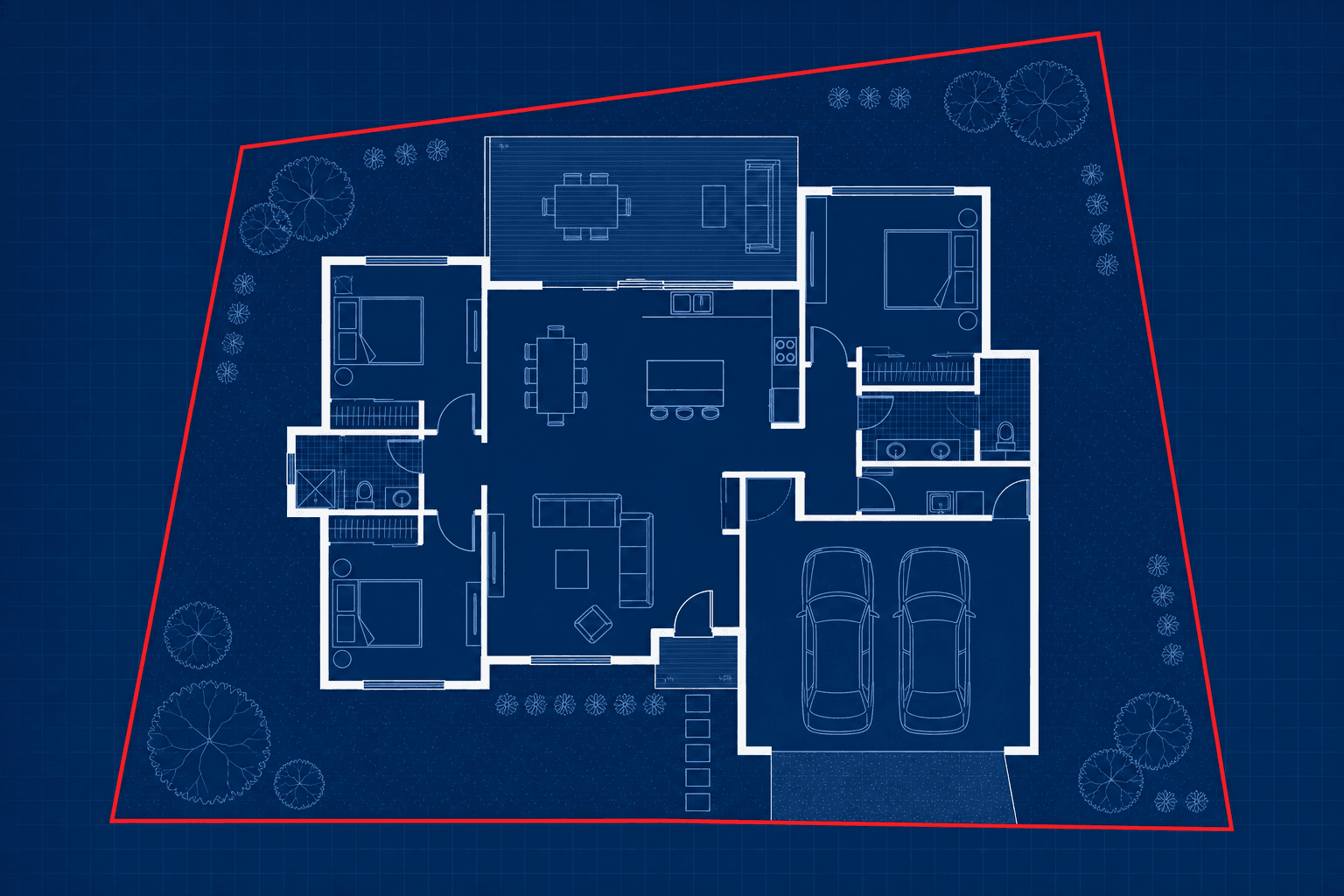
Demised premises edged in red
The leased area is enclosed by a continuous red line following the walls and any included external areas.
North point, scale bar & shared areas
A compliant plan shows a north point, a graphic scale bar and communal areas coloured (commonly green).
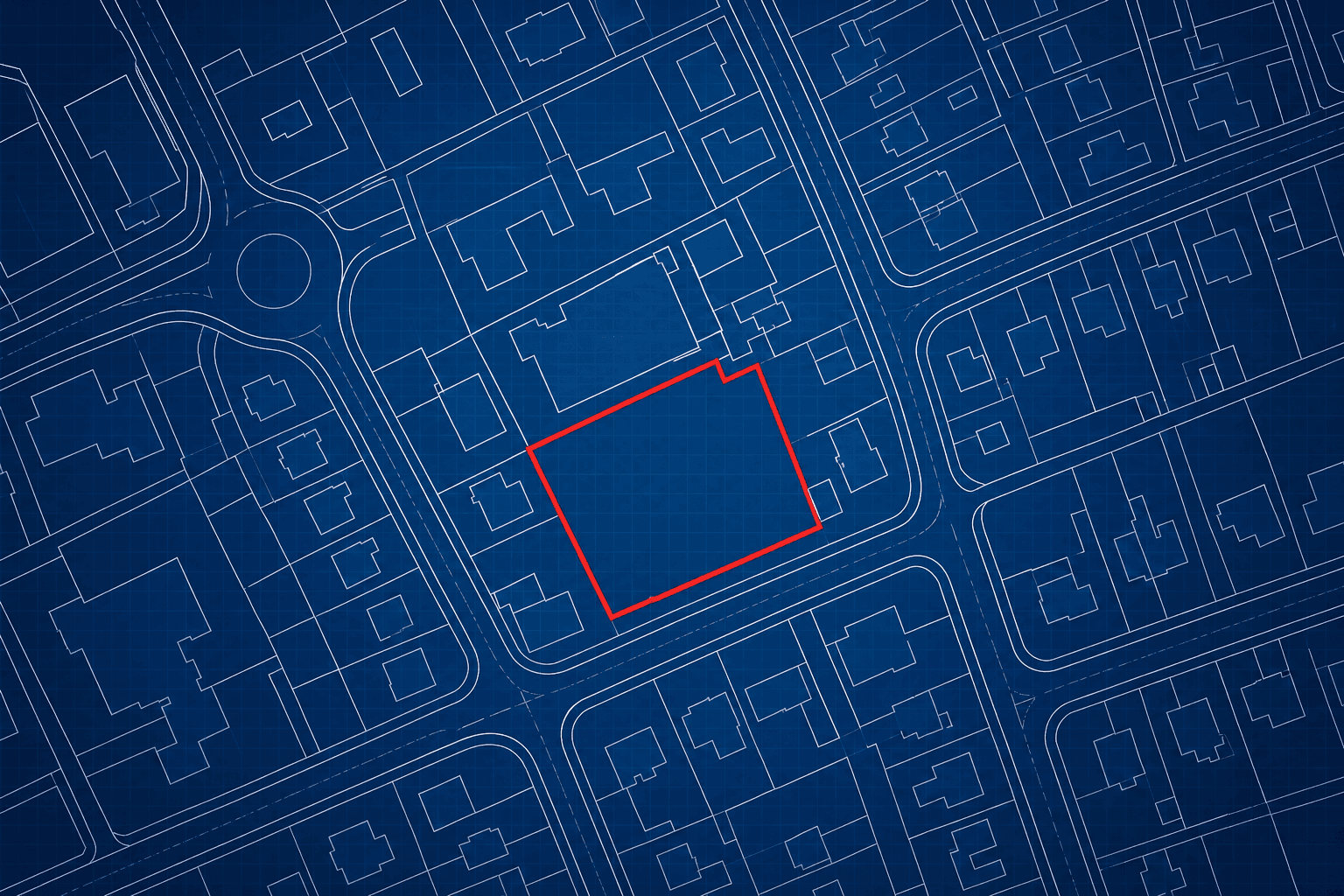
Ordnance Survey location plan
The property is identified on an OS-based location plan with enough surrounding detail to locate it.
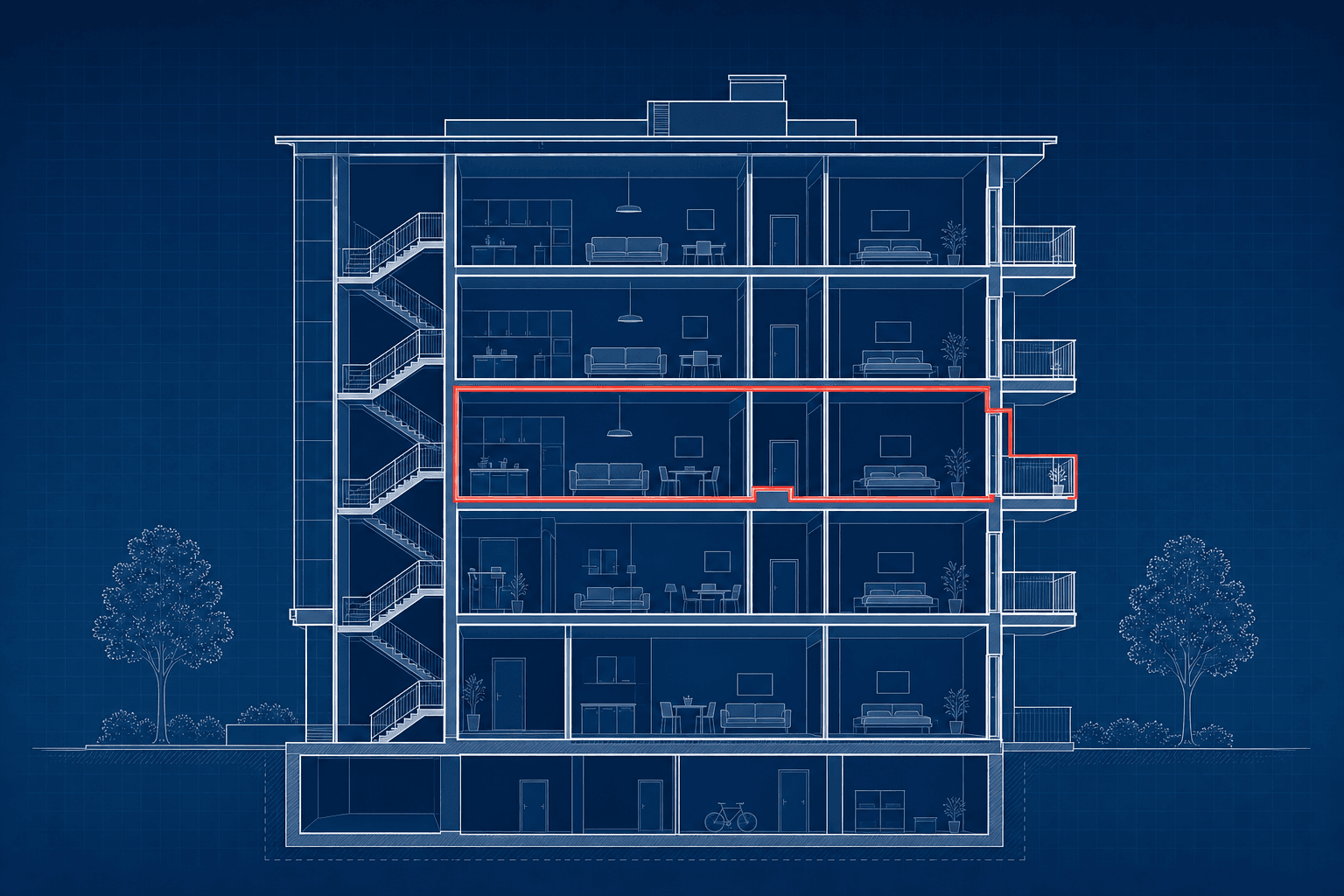
Floor levels & demised premises
For flats, each floor level is labelled and the individual demise is clearly distinguished from the building.
A non-compliant plan is rejected
Incorrect scale, missing north point or unclear boundaries lead to an HM Land Registry requisition.
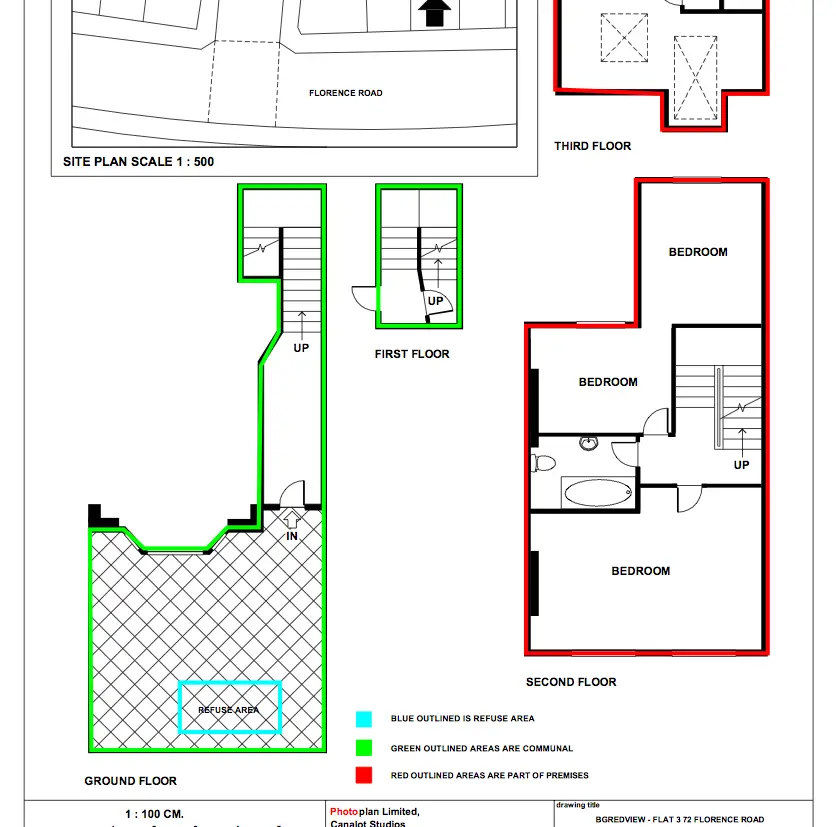
A finished compliant lease plan
An example Land Registry compliant lease plan produced by our CAD team, ready for submission.
Prepared using HM Land Registry Practice Guide 40
Every lease plan we produce is created to meet the latest HM Land Registry guidance (Practice Guide 40), helping reduce the risk of requisitions and delays. While compliance is assessed by HM Land Registry on each application, our plans are prepared in line with current published requirements.
Read Practice Guide 40 on GOV.UKLease plan requirements — FAQs
Get a compliant lease plan
Send us the property address and we will produce a Land Registry compliant lease plan, prepared to Practice Guide 40 standards.
- A Photoplan Company
- Thousands of plans produced
- Land Registry compliant
- Nationwide coverage across England & Wales
- Residential and commercial experience