

Colouring Requirements for Lease Plans
Colour is how a lease plan communicates ownership and rights. This guide explains red edging, green communal areas and the conventions for other rights.
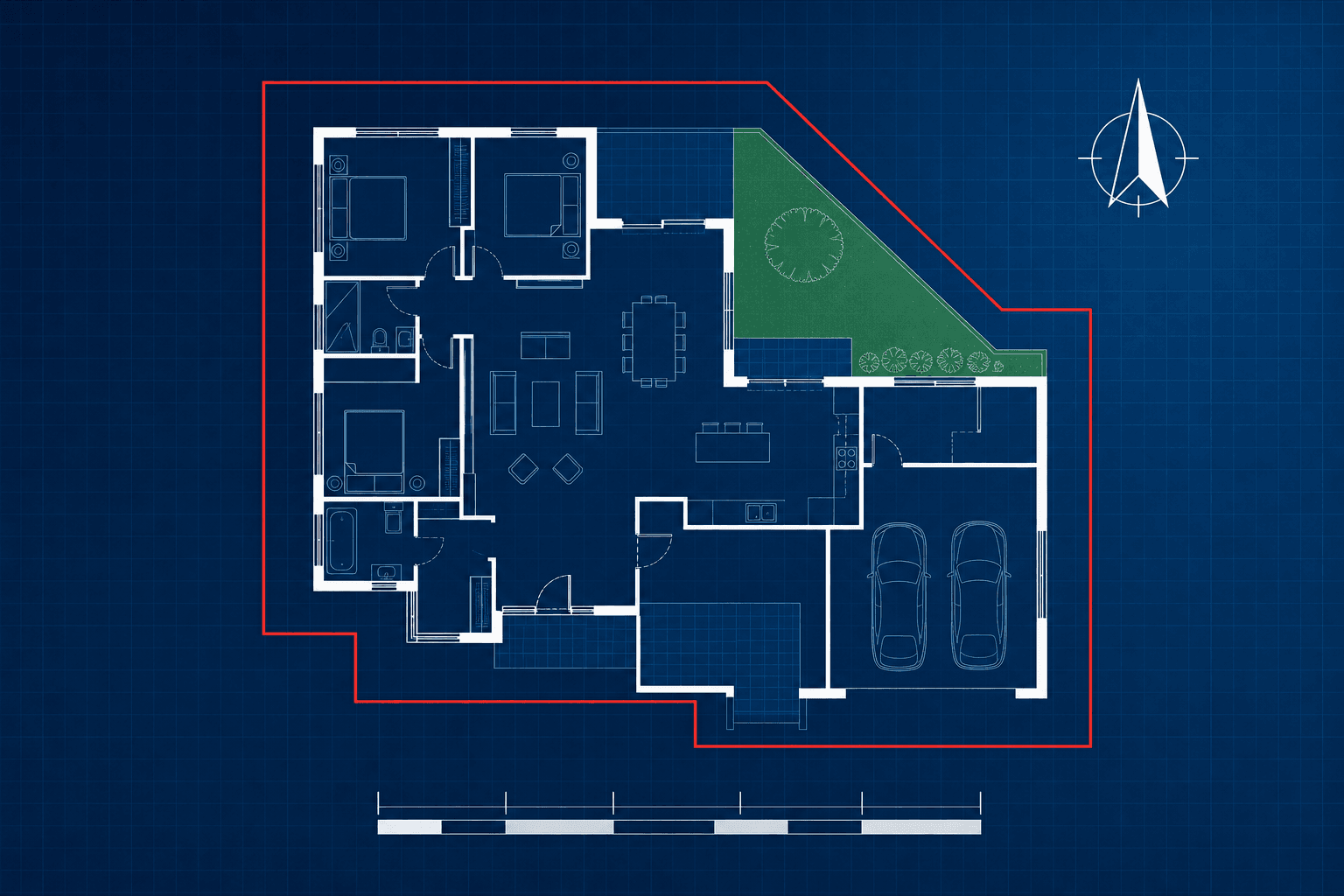
What do the colours on a lease plan mean?
On a lease plan the demised area is edged in red.. Communal or shared areas — halls, staircases, gardens — are usually shown in green. Additional rights such as rights of way may be shown in other colours like blue or brown. Colouring must be clear and consistent, and ideally supported by distinct edging so the plan still works in black and white.
Red: the demised area
The demised area — the part exclusively let under the lease — is edged in red. This is the single most important colour on the plan. The red line must follow the actual walls and enclose every area included in the lease, so HM Land Registry can see precisely what is being leased.
Green: communal and shared areas
Communal or shared areas — entrance halls, staircases, lift lobbies, bin stores and shared gardens — are commonly shown in green. This distinguishes them clearly from the demise and is especially important in flatted buildings where the whole building is divided between leases and retained areas.
Other colours: rights and additional areas
Additional rights and areas may be shown in other colours by convention — blue and brown are often used for rights of way, areas over which rights are granted, or land subject to particular provisions. Where additional colours are used, a key should explain them so the plan is unambiguous.
Making colour survive copying
Plans are frequently photocopied in black and white, so colour alone is not enough. Distinct edging styles and, where helpful, hatching ensure the demise and other areas remain identifiable even without colour. Clear, consistent colouring is a hallmark of a compliant, professionally produced lease plan.
Need a lease plan?
We produce Land Registry compliant lease plans across England and Wales. Send us the property details for a fixed-price quote.