

Title Plans Explained
A title plan is the HM Land Registry map that shows the extent of a registered property. This guide explains title plans, deeds, registers, boundaries and how to get a copy.
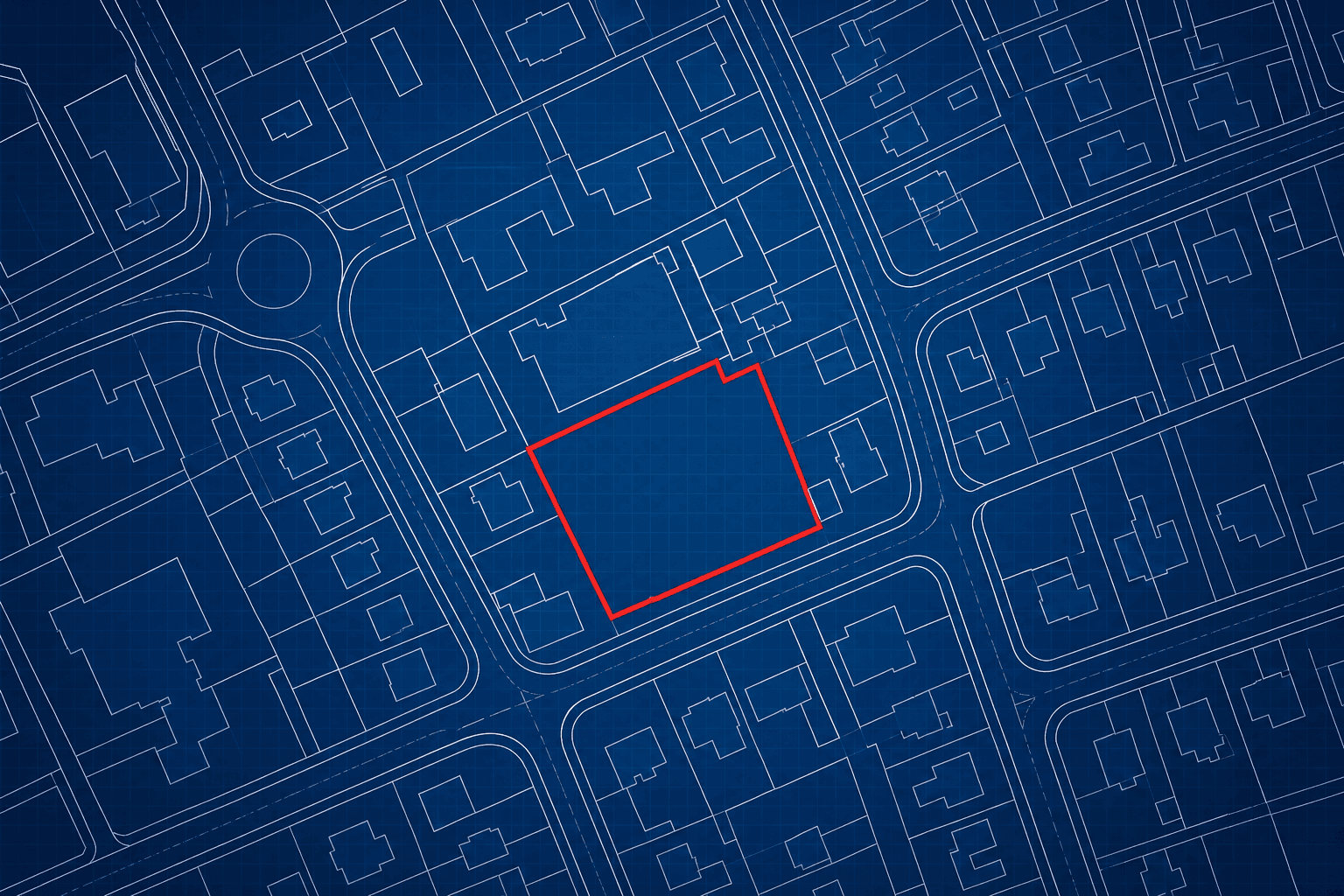
What is the difference between a title plan, the title register and title deeds?
The title plan is the map that shows the general extent of a registered property, edged in red.. The title register is the document that records who owns it, the class of title, the price paid and any charges, rights or restrictions. Title deeds are the older, often pre-registration paper documents that traced ownership and conditions before HM Land Registry digitised the record. Today the title plan and title register together are the official proof of ownership, and the deeds are largely historical.
- Title plan — shows the boundaries and extent of the property
- Title register — records ownership, price paid, charges and rights
- Title deeds — historic paper documents of past ownership
- Lease plan — shows the exact demise of an individual lease
What is a title plan?
A title plan is the scaled map that HM Land Registry holds for a registered property, showing the general extent of the land included in that title, edged in red. It is based on Ordnance Survey mapping and forms part of the official register of ownership for England and Wales. In plain terms, the title plan answers one question: where, roughly, is the land that this title covers?
The title plan does not usually show internal layouts, room divisions or the precise legal boundary to the centimetre. It shows the parcel of land tied to a title number, against the surrounding streets and buildings on the OS map, so the property can be located and identified.
Title plan vs title register vs title deeds
These three terms are often used interchangeably, but they are different things. The title plan is the map; the title register is the written record of ownership and rights; and title deeds are the older paper documents that pre-date electronic registration. Since HM Land Registry computerised the register, the title plan and title register together are the official proof of ownership, and the original deeds are largely historical.
A lease plan sits alongside these documents but does a different job again: it is prepared by a specialist and submitted with an application to define the exact demise of an individual lease, rather than the general extent of a whole title.
| Document | What it is | What it shows | Who holds / produces it |
|---|---|---|---|
| Title plan | Official HM Land Registry map | General boundaries and extent of the property, edged in red | Issued by HM Land Registry |
| Title register | Written ownership record | Owner, class of title, price paid, charges, rights and restrictions | Held by HM Land Registry |
| Title deeds | Historic paper documents | Past ownership and conditions before registration | Often held by owners, solicitors or lenders |
| Lease plan | Specialist application drawing | Exact demise of one lease, to scale, edged in red | Prepared by a specialist and submitted |
How title plans, registers, deeds and lease plans compare
What the red edging and the general boundaries rule mean
On a title plan the land in the registered title is edged in red. Crucially, this red edging is drawn under the "general boundaries rule": it shows the general position of a boundary, not its exact legal line. Two properties can therefore have a precise hedge, wall or fence line on the ground that the title plan only indicates approximately.
This is by design. HM Land Registry registers most titles with general boundaries so that the register stays workable without surveying every boundary to the millimetre. Where an exact line genuinely matters — for example in a boundary dispute — you can apply to "determine" the boundary, which requires a precise scaled plan to a far higher standard of accuracy than the general title plan.
Other colours and tints can appear on a title plan too. They are used to show rights of way, land that has been removed from the title, or areas subject to particular entries, and each is explained in the accompanying title register.
Are title plan boundaries accurate?
Title plan boundaries are accurate enough to identify and locate a property, but they are not a definitive statement of the exact boundary line. Because they follow the general boundaries rule, you should not rely on a title plan to settle precisely where a fence should sit or to resolve a few centimetres of disputed land. For that you need a determined boundary application supported by a measured, scaled plan.
This distinction matters most for plot sales, transfers of part and new developments, where land is being divided and each parcel must align cleanly with its neighbours and with the OS base map.
How do I get a copy of my title plan?
You can obtain an official copy of an existing title plan directly from HM Land Registry online for a small fee, using the property address or its registered title number. Most conveyancers and solicitors can also obtain copies during a transaction, and a copy of the title register can be downloaded in the same way.
It is important to separate two different needs. If you simply want to see the existing extent of a registered title, you download the official copy from the Registry. If you are making an application — transferring part of a title, registering unregistered land for the first time, splitting or amalgamating titles, or defining a new boundary — you must prepare and submit your own scaled application plan that aligns with the registered title plan and Ordnance Survey mapping. That is the plan we produce.
When you need a new plan prepared
Downloading the existing title plan is enough when you are checking ownership or extent. You need a new, professionally prepared plan when you transfer part of a registered title, complete a first registration of unregistered land, sell new-build plots within a development, split one title into several, amalgamate adjoining titles, or apply to determine an exact boundary.
In each of these cases a verbal description is not sufficient. HM Land Registry requires a scaled plan that clearly identifies the land, ties it to identifiable features, and aligns with the OS base map, prepared in line with Practice Guide 40. We produce these application plans in AutoCAD and supply them as a PDF with scaled printed copies ready for submission.
Can you change title plan boundaries?
Yes — the boundaries shown on a title plan change whenever the land itself is divided, combined or formally fixed. Transferring part of the land, buying adjoining land and merging titles, or applying to determine an exact boundary all update what the title plan shows. Each requires a scaled application plan submitted to HM Land Registry, after which the Registry updates the title plan to reflect the new extent.
Because these plans must align precisely with the existing title and the Ordnance Survey map, they are best prepared by a specialist familiar with the practice guides, so the application is accepted without a requisition.
Need a new title or transfer of part plan?
We prepare Ordnance Survey-aligned application plans for transfers of part, first registrations, plot sales and title splits across England and Wales. Send us the property details for a fixed-price quote.