

Leasehold Reform 2026: Will You Still Need a Lease Plan?
The Commonhold and Leasehold Reform Bill proposes major ownership changes — but accurate Land Registry plans will still be needed for leasehold and commonhold alike.
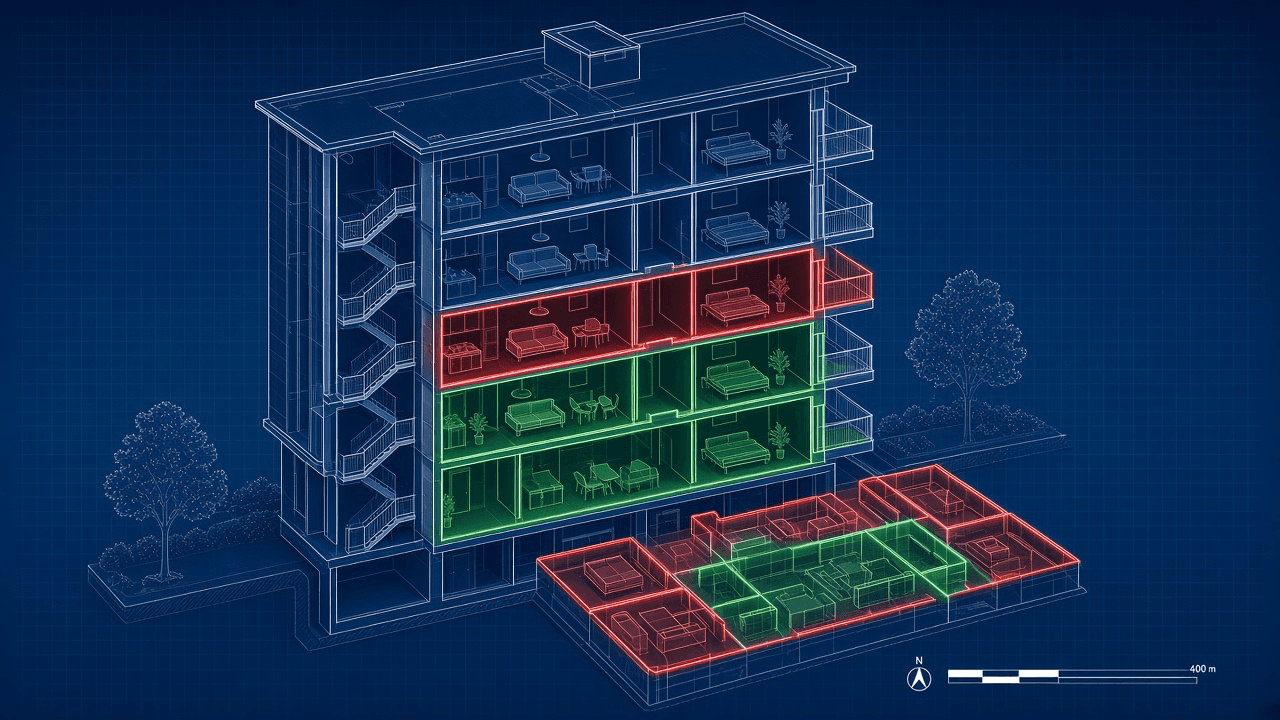
Will residential properties still need Land Registry lease plans after leasehold reform?
Yes.. Although the Commonhold and Leasehold Reform Bill proposes major changes to residential ownership in England and Wales, accurate property plans will still be needed to identify ownership boundaries and support registration. Existing long leases are not automatically cancelled, and commonhold still requires plans that define individual units and shared areas.
Will residential properties still need Land Registry lease plans?
Yes. Although the ownership system is set to change, accurate property plans will continue to play an essential role in identifying ownership boundaries and supporting property registration. The UK government has introduced the Commonhold and Leasehold Reform Bill, proposing some of the biggest changes to residential property ownership in England and Wales for generations.
With plans to make commonhold the default form of ownership for most new flats and eventually restrict new leasehold flats, homeowners, landlords, developers and solicitors may be asking whether residential properties will still need Land Registry lease plans. The short answer is yes — the reforms change how many flats are owned, not the need for clear, scaled plans.
What is changing under the Leasehold Reform Bill?
Introduced to Parliament on 19 November 2026, the Commonhold and Leasehold Reform Bill proposes several significant changes: restricting the creation of new residential leasehold flats (with limited exemptions); making commonhold the default ownership structure for most new flats; making it easier for existing leaseholders to convert their buildings to commonhold; capping ground rents on existing leases and strengthening protections for leaseholders; and reforming the process for lease extensions and collective freehold purchases.
Importantly, these changes have not yet become law. The Bill must complete the parliamentary process, and different reforms will come into effect at different times.
Will existing residential lease plans still be required?
Yes, where the relevant property transaction or registration requires one. Millions of existing residential properties are held on long leases. The proposed reforms do not automatically cancel those leases or convert every property to commonhold.
Lease plans may continue to be needed for granting new residential leases where permitted, lease extensions that involve the grant of a replacement lease, subdivisions and conversions under the rules applicable at the time, changes to property boundaries or the extent of a lease, and correcting inadequate or inaccurate plans during registration.
Not every transaction requires a newly prepared lease plan. An existing plan may be sufficient, depending on the transaction and HM Land Registry’s requirements. For solicitors, landlords and property owners, correctly identifying the land included within a legal title remains essential.
What happens to lease plans when commonhold replaces leasehold?
Under commonhold, individual flat owners hold the freehold of their units, while shared areas are managed collectively through a commonhold association. Although this changes the legal ownership structure, the property boundaries must still be clearly identified.
HM Land Registry’s existing commonhold guidance requires a commonhold community statement plan showing the extent of the commonhold development, the boundaries of individual commonhold units, shared areas and common parts, the location and floor levels of individual units, and appropriate scales, orientation and identification of boundaries.
This means that accurate measured drawings and land registration plans will remain important even where traditional leasehold arrangements are replaced. The precise requirements for the reformed commonhold system may develop as the legislation progresses.
Will new flat conversions still need plans?
Yes, although the type of ownership and legal documentation may change. The government’s proposed restrictions extend beyond newly constructed apartment blocks. They are intended to cover many building conversions and repurposed properties containing new flats.
The government currently proposes a two-and-a-half-year transition between the reformed commonhold system becoming available and the restrictions on new leasehold flats coming into effect. Certain existing development pipelines are also expected to receive transitional protection.
For developers converting houses, offices or other buildings into flats, preparing accurate plans showing each property’s layout, boundaries and shared areas will remain important. Whether a traditional lease plan or a commonhold plan is appropriate will depend on the legal structure, applicable rules and advice from the conveyancing solicitor.
What should solicitors and property developers do now?
For the time being, existing Land Registry requirements continue to apply. Solicitors and developers should ensure that property plans accurately reflect the legal boundaries of the premises involved in a transaction.
As commonhold becomes more widely adopted, the property industry will need to adapt to updated documentation, registration procedures and technical requirements. At Photoplan, we will continue monitoring the legislation and HM Land Registry’s guidance to ensure our property plan services respond to the changing needs of homeowners and legal professionals.
Residential lease plans from £199 + VAT, including a site survey. This article provides general information as of 19 November 2026 and does not constitute legal advice. The proposals remain subject to parliamentary scrutiny, and individual registration requirements should be confirmed with a qualified conveyancer.
Official sources
Commonhold and Leasehold Reform Bill – GOV.UK: https://www.gov.uk/government/collections/commonhold-and-leasehold-reform-bill
HM Land Registry Practice Guide 60: Commonhold – https://www.gov.uk/government/publications/commonhold/practice-guide-60-commonhold
HM Land Registry Practice Guide 28: Extension of Leases – https://www.gov.uk/government/publications/extension-of-leases/practice-guide-28-extension-of-leases
Need a lease plan?
We produce Land Registry compliant lease plans across England and Wales. Send us the property details for a fixed-price quote.